
Why your gut feelings are real: the vagus nerve, microbial messages and the physiology of the gut-brain
Why your gut feelings are real: the vagus nerve, microbial messages and the physiology of the gut-brain

Most people have experienced a so-called gut feeling, a sense of anticipation or unease that seems to rise from the abdomen. While this expression is often used metaphorically, research shows that these sensations are grounded in measurable neurophysiology. The key player is the vagus nerve, a long cranial nerve that serves as a two-way communication pathway between the gut and the brain. Through this nerve, the gastrointestinal (GI) tract continuously sends updates about mechanical stretch, nutrients, immune signals and microbial metabolites to the brainstem¹.
For healthcare professionals, understanding this pathway is increasingly important. The vagus nerve is central to digestive regulation, autonomic balance and the interpretation of internal bodily signals. Its interactions with the gut microbiome are now recognised as key drivers of the gut-brain axis, making vagal signalling an area of active global research.
The vagus nerve: the communication cable between gut and brain
The vagus nerve originates in the brainstem and extends throughout the neck, chest and abdomen, connecting with the oesophagus, stomach, intestines and several other organs¹. Around 80 to 90 per cent of its fibres are afferent, carrying sensory information from the gut to the brain rather than the other way around. These fibres detect a range of internal signals, including GI stretch, nutrient presence, pH shifts and immune activity.
Recent literature describes the neuroanatomical structure of vagal signalling: sensory fibres synapse in the nucleus tractus solitarius (NTS), which integrates information and modulates the dorsal motor nucleus of the vagus (DMV) to coordinate digestive processes such as motility and secretion¹. This circuitry allows the brain to respond rapidly to changes in the gut environment.
How the microbiome uses the vagus nerve to communicate with the brain
One of the most compelling advances of recent years is the discovery that the gut microbiome can directly influence vagal nerve activity. Experimental models demonstrate that germ-free animals show significantly lower vagal activity than those with an intact microbiome². When gut bacteria are introduced, vagal signalling returns to normal. Conversely, antibiotic treatment reduces vagal activity, which is restored when microbiome-containing intestinal fluids are reintroduced².
These effects appear to be driven by microbial metabolites, including short-chain fatty acids (SCFAs) and bile acids, which activate vagal sensory neurons through receptor-based pathways². This suggests that the microbiome is not merely a passenger in the GI tract but an active participant in signalling that can influence appetite, motility, feelings of fullness and other interoceptive sensations.
Why emotions are felt in the gut
Stress, anticipation and emotional fluctuations often cause immediate gastrointestinal reactions. This occurs because vagal circuits are sensitive to changes in autonomic tone. Under stress, the balance of excitatory and inhibitory signalling in the DMV can shift, disrupting gastric motility and secretion³. Dysregulation of this pathway contributes to functional GI symptoms such as bloating, discomfort or altered motility.
Stress-related reductions in vagal tone also impair the transmission of gut-derived information to the brain, influencing appetite, digestive rhythm and subjective sensations arising from the gut. This link between emotional state and gut activity helps explain why so-called butterflies, nausea or urgency can accompany altered mood or stress.
Why the gut sends constant status updates to the brain
The gut has its own intrinsic nervous system, the enteric nervous system (ENS), but it is the vagus nerve that relays much of this information to central brain regions. The vagus reports on:
- Mechanical stretch and food volume
- Nutrient composition
- Immune signals
- Luminal chemical environment
- Microbial metabolites such as SCFAs and bile acids²
This sensory feedback shapes digestive reflexes and also influences higher-order processes such as appetite regulation, mood, interoceptive awareness and autonomic balance.
Recent reviews highlight the complexity of this multi-layer communication system, emphasising interactions across neural, immune and endocrine pathways⁴. These findings reinforce the idea that gut-derived signals play a significant role in shaping human physiology and behaviour.
The expanding field of gut-brain research
The microbiota-gut-brain axis is recognised as a dynamic and multifaceted system involving immune, neural and metabolic interactions⁵. Disruptions in microbial balance can alter vagal signalling, immune pathways and neurochemical output. For example:
- Early GI symptoms in Parkinson’s disease may relate to vagal dysregulation¹
- Microbial metabolites can influence central nervous system activity and inflammation⁴
- Vagal pathways are being explored as a target for neuromodulation in gastrointestinal and neurological research¹
Although clinical applications remain in development, understanding how the vagus nerve mediates gut-brain communication offers new insights into digestive and nervous system health.
Why this matters for healthcare professionals
For clinicians, appreciating vagal physiology can enhance conversations and assessments relating to:
- The interplay between GI symptoms and emotional stress
- The influence of microbial metabolites on gut-brain signalling
- The role of autonomic tone in digestive function
- The impact of lifestyle, diet and stress on vagal activity
- Patients’ lived experiences of gut sensations
The growing body of evidence surrounding vagal signalling and microbiome-derived messages reveals that gut feelings are deeply tied to measurable neurophysiology. As research advances, the gut-brain axis is emerging as a critical interface influencing digestion, immunity, mood and interoception. For healthcare professionals, appreciating this complexity opens new avenues for understanding symptoms, communicating with patients and anticipating future therapeutic innovations that target this interconnected system.
This content is for educational purposes only and is not a substitute for health professional advice.
References
¹ Xing T, Ozkaya KS, Nassrallah Z, Travagli RA. The vagus connection: exploring the neurobiology of brain-gut communication. Journal of Neurophysiology. 2024;135(1). https://journals.physiology.org/doi/full/10.1152/jn.00516.2024
² Jameson KG, et al. Select microbial metabolites in the small intestinal lumen regulate vagal activity via receptor-mediated signaling. iScience. 2024. https://doi.org/10.1016/j.isci.2024.111699
³ Xing T, Ozkaya KS, Nassrallah Z, Travagli RA. The vagus connection: exploring the neurobiology of brain-gut communication. Journal of Neurophysiology. 2024;135(1).
https://journals.physiology.org/doi/full/10.1152/jn.00516.2024
⁴ Riehl L, Fürst J, Kress M, Rykalo N. The importance of the gut microbiome and its signals for a healthy nervous system and the multifaceted mechanisms of neuropsychiatric disorders. Frontiers in Neuroscience. 2024;17. https://doi.org/10.3389/fnins.2023.1302957
⁵ O’Riordan KJ, Moloney GM, Keane L, Clarke G, Cryan JF. The gut microbiota-immune-brain axis: therapeutic implications. Cell Reports Medicine. 2025;6(3):101982. https://doi.org/10.1016/j.xcrm.2025.101982

Robert Hendriks MD
Chief Executive Officer, SFI Health
Learn
Research is important, and we want to share it. Our articles distill the complex research and offer expert analysis on the microbiome, brain health and wellbeing.

The gut-first approach: what kefir’s popularity reveals about 2026 health trends
Kefir’s rise reflects a broader shift toward gut‑first, functional nutrition.
Read more
How the gut microbiome turns food into fuel: the hidden engine of human energy
The microbiome: the hidden engine behind human performance.
Read more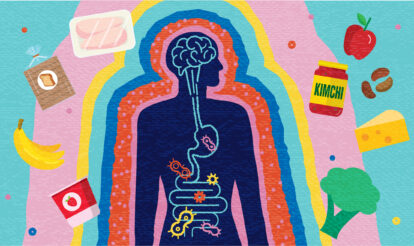
Healthcare professionals can now access a global gut microbiome database for free
The Human Gut Microbiome Atlas (HGMA) offers free global data on gut microbes, enabling research into health, disease, and personalized treatments.
Read more